Commentary
Tiberiu Dianu
1. From the Warsaw Pact 1955 to the Warsaw NATO Summit 2016
Between July 8 and 9, 2016, Poland’s capital hosted the last NATO summit. It
is a little ironic, if not downright surprising, that after more than six decades the
tables are now turned: A NATO meeting taking place in the very Eastern Euro-
pean city which used to be the military headquarters of the anti-NATO former
communist bloc.
Initially, on May 14, 1955, the Warsaw Pact had been created and designed in
reaction to the integration, in the same year, of West Germany into NATO (which
was created earlier, in 1949), and also as a tool of maintaining control and domi-
nance of Central and Eastern Europe by the Soviet Union.

However, a longitudinal analysis of the Pact (from May 14, 1955 to July 1,
1991) shows two interesting facts. First, the Warsaw Pact and NATO never
directly waged war against each other in Europe (although the US and the
USSR, with their allies, worked and fought constantly for influence within
the Cold War period both in Europe, and on the international arena). Second,
the most notable military operations of the Warsaw Pact were, in fact, direc-
ted against its own allied countries.
Indeed, the Pact has a long and constant history of punishing its own member
states that showed signs of defection from an organization whose goal was to
fight the common enemy that the United States, Canada, and Western Europe
were supposed to represent. The Soviet troops invaded Hungary (in1956) and,
backed up by armed forces of other member countries, Czechoslovakia (in 1968),
removing the local governments of these countries who announced they would
withdraw from the Pact. Romania and Albania did not participate with troops
in the invasion of Czechoslovakia, criticizing the Moscow’s move (Albania for-
mally withdrew from the Pact in the same year). However, when a violent anti-
communist revolution erupted in Romania, in December 1989, there was no mi-
litary intervention from the Warsaw Pact member states, which marked the de
facto disbanding of this organization.
On February 25, 1991, in Budapest, Hungary, at a meeting of defense and fore-
ign minister from the remaining Pact countries (Bulgaria, Czechoslovakia, East
Germany, Hungary, Poland, Romania, and the Soviet Union), the Warsaw Pact
was declared disbanded. The Pact was finally dissolved on July 1, 1991.
The event was followed by the Soviet Union disestablishment, in December 1991,
and the NATO joining, between 1999 and 2009, of Czech Republic, Hungary and
Poland (in March 1999), Bulgaria, Estonia, Latvia, Lithuania, Romania, Slovakia
and Slovenia (in March 2004), Albania and Croatia (in April 2009).
2. Directions of action
On July 9, the Summit adopted a series of key documents outlining the NATO’s
main directions of action in the period to come, related to: the final statement (ca-
lled Communiqué), the European Union, Ukraine, Georgia, Afghanistan, cyber
defense, and protection of civilians, plus two novel documents, related to Trans-
atlantic security and commitment to enhance resilience. The meeting in interope-
rability format at the level of Defense Ministers did not have a final document.
The Communiqué, is a 139-article document presenting some important points
related (but not limited) to: Eastern Europe, the Mediterranean and Caucasus re-
gions; Northern Africa, the Near and Middle East regions; and some strategies
of improving the NATO policies.
2.1. Eastern Europe, the Mediterranean and Caucasus regions
These regions – being the initial zones of the NATO interoperability actions –
have been granted special attention, substantiated, among others, in measures
related to:
(2.1.1.) Inviting Montenegro to join the Alliance for Montenegro, as the 29th
NATO member – a move that blocks a possible Russian corridor (through Ser-
bia) toward the Adriatic Sea and the Mediterranean Sea (Art. 1);
(2.1.2.) Acknowledging Russia’s aggressive actions, which are a source of reg-
ional instability (Art. 5);
(2.1.3.) Declaring support for Ukraine’s sovereignty and territorial integrity wi-
thin its internationally recognized borders (Art. 16);
(2.1.4.) Developing partnership relations with Finland and Sweden in the Baltic
Sea region, with Georgia and Ukraine in the Black Sea region, and strengthening
the maritime posture and comprehensive situational awareness in the North Atlan-
tic, as well as in the Mediterranean Sea (Art. 23);
(2.1.5.) Establishing, in early 2017, four battalion-sized battle groups – that is,
4,000 troops -- that can operate in concert with national forces , present at all ti-
mes, in Estonia, Latvia, Lithuania and Poland, with Canada, Germany, the Uni-
ted Kingdom and the United States to serve as framework nations for the robust
multinational presence in these aforementioned countries (Art. 40);
(2.1.6.) Establishing a multinational framework brigade under Headquarters Mul-
tinational Division Southeast in Romania, tailored to the Black Sea region (Art.
41);
(2.1.7.) Declaring the achievement of the NATO Ballistic Missile Defense (BMD)
Initial Operational Capability (Art. 57).
This offers a stronger capability to defend the populations, territory and forces
across southern NATO Europe against a potential ballistic missile attack. It inclu-
des: the forward deployment of BMD-capable Aegis ships to Rota (Spain); the Ae-
gis Ashore site in Deveselu (Romania); a forward-based early warning BMD radar
at Kürecik (Turkey); and an Aegis Ashore site at the Redzikowo military base (Po-
land). By 2018, when the missile shield bases in Romania and Poland are fully op-
erational, this defensive umbrella will cover the area from Greenland to the Azores.
(2.1.8.) Providing support to the development of Georgia’s defense capabilities nee-
ded to implement the Substantial Package, which helps Georgia advance in its prepa-
rations for the NATO membership (Art. 112). This reiterates the Alliance’s decision
made at the 2008 Summit in Bucharest (Romania).
2.2. Northern Africa, the Near and Middle East regions
These regions, germane for the fight against Islamic terrorism, have been alloca-
ted a series of measures, which, on the NATO behalf, includes:
(2.2.1.) Committing to ensure long-term security and stability in Afghanistan, by
sustaining the Resolute Support mission beyond 2016, including until the end of
2020, through a flexible, regional model, to continue to deliver training, advice,
assistance, and financial sustainment to the Afghan National Defense and Secur-
ity Forces (Art. 86);
(2.2.2.) Agreeing, in principle, to enhance the Alliance’s contribution to the efforts
of the Global Coalition to Counter ISIS/ISIL by providing direct NATO support to
increase the coalition’s situational awareness (Art. 96). However, this contribution
to the Global Coalition does not make NATO a member of this coalition.
(2.2.3.) Developing partnerships with countries of the Middle East and North Africa
regions through deeper political dialog and enhanced practical cooperation (Arts.
103-104).

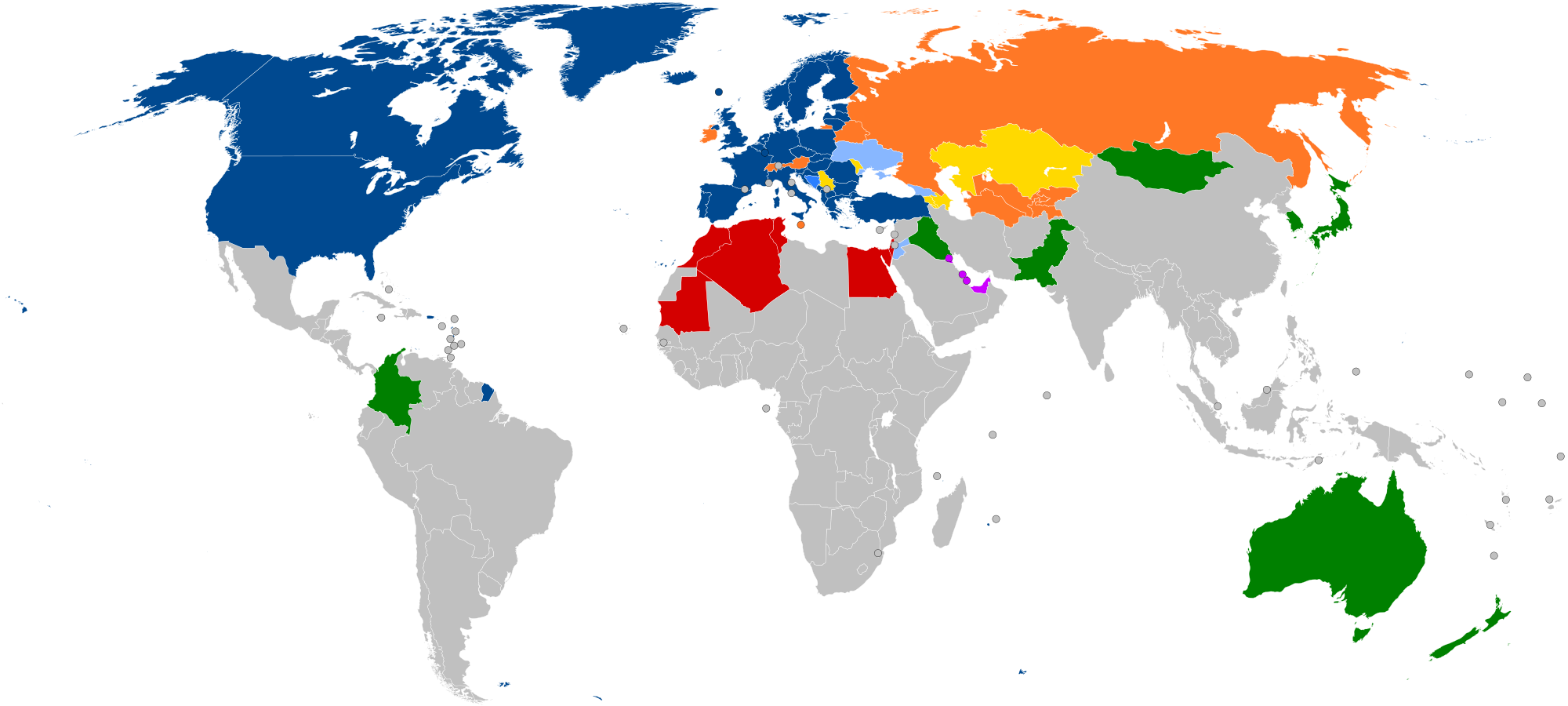
Such partnership frameworks include The Mediterranean Dialogue (MD) and the
Istanbul Cooperation Initiative (ICI), through which NATO provides assistance to
eleven partner countries in the region to help them modernize their defense establish-
ments and military forces (Algeria, Egypt, Israel, Jordan, Mauritania, Morocco, Tuni-
sia – for the MD, and Bahrain, Kuwait, Qatar and the United Arab Emirates – for the
ICI).
2.3. Strategies of improving the NATO policies
NATO is facing a new world with new challenges. During the Summit there were
expressed concerns vis-à-vis the NATO relations with the EU and it strategies regar-
ding emerging technologies and their applicability in the military domain.
Only five of the current twenty-eight member states meet the NATO guideline to
spend a minimum of 2% of their Gross Domestic Product on defense (Art. 34).
The NATO Secretary General, the President of the European Council, and the Presi-
dent of the European Commission issued a joint declaration in Warsaw, which outli-
nes a series of actions the two organizations – NATO and the EU – intent to take to-
gether in concrete areas, including countering hybrid threats, enhancing resilience,
defense capacity building, cyber defense, maritime security, and exercises (Art. 122).
NATO recognizes the importance of a stronger and more capable European defense,
which will foster an equitable sharing of the burden, benefits and responsibilities of
Alliance membership (Art. 124).
In the fight against terrorism, NATO will continue to improve capabilities and tech-
nologies, including defending against improvised explosive devices and chemical,
biological, radiological and nuclear (CBRN) threats, and enhance cooperation in ex-
changing information on returning foreign fighters (Art. 134).
For acquiring NATO capabilities, a stronger defense industry across the Alliance re-
mains essential. This includes small- and medium-sized enterprises, greater defense
industrial and technological cooperation across the Atlantic and within Europe, and
a robust industrial base in the whole of Europe and North America (Art. 136).
It was convened that the next meeting would be held in 2017, at the new NATO
Headquarters in Brussels.
3. Odd allies
It was expected that after Russia’s land invasions in Georgia (Abkhazia and South
Ossetia, in 2008), Ukraine (Crimea, in 2014), and air space violations in Norway
(in 2015), the Baltic nations, and Turkey (in 2016), NATO would come in stronger
terms in communicating with this country. And indeed, the Communiqué contains
formulas likely to suggest that, until Russia’s actions do not demonstrate compli-
ance with international law and its international obligations and responsibilities,
there cannot be a NATO return to “business as usual.”
And still, France and Germany have acted one more time as odd allies, in a visible
and disturbing discrepancy to the approaches coming from the U.S., the NATO Se-
cretary General, and the other member states.
Thus, the French president, François Holland, adopting a lamentable dovish attitu-
de, insisted that Russia is “a partner,” not “a threat.” Moreover, he insisted that “NA-
TO has no role at all to be saying what Europe’s relations with Russia should be. For
France, Russia is not an adversary, not a threat.” This stance has not remained with-
out practical consequences. France insisted that the U.S. be removed from the coor-
dination of the Aegis Ashore site in Deveselu, Romania, although the U.S. built the
European missile-defense system, and the command and control be transferred to
NATO (see Art. 57). In addition, another compromise was made: by deploying the
four battalion-sized battle groups in the Baltic States and Poland on a rotational, not
permanent, basis (see Art. 40).
On the other hand, both the German and French foreign ministers, Frank-Walter Ste-
amier and Jean-Marc Ayrault, insisted on the argument that Europe should strength-
en its defense role, creating irritation and worries to the U.S. and Canada, who fear
that Europe would duplicate the NATO military structures.
In order to counter-balance the anti-productive positions of the French and the Ger-
mans, the NATO Secretary General, the Norwegian Jens Stoltenberg, felt complied
to clarify that the Alliance should “stand together” and have a homogeneous policy
on Russia. He distanced himself from Hollande’s position, saying that at this mom-
ent NATO is in an entirely new situation: “[W]e are not in the strategic partnership
with Russia […] but we are neither in a Cold War situation” and that “we are in a
new situation which is different to anything else we have experienced before.”
With enemies like Hollande and Steinmeier, who needs friends for Putin’s Russia?
4. Impact of the Warsaw NATO Summit for the United States
For the U.S., in general, and President Barack Obama, in particular, the Summit
meant a limited success. The limited success consists of:
(4.1.) Deploying a U.S. armored brigade of 1,000 troops in Poland next year, to
strengthen the NATO’s Eastern flank. This is considered the most important mo-
ment for the Alliance since the end of the Cold War.
(4.2.) Deploying, in addition, three rotational – not permanent – NATO battalions
on the Eastern flank, close to the Baltic Sea, in the Baltic states of Estonia, Latvia,
and Lithuania. The United Kingdom, Germany, and Canada will coordinate these
battalions and will send around 500 troops for the battalions under their command.
This is regarded as the largest dislocation of troops NATO had had since its incep-
tion, in 1949. Some skeptics have considered this an unjustifiable measure, and as
a symbolic gesture, offered by the major member of the Alliance, namely the Uni-
ted States, to its smaller East European allies. This is not the case. There are far fe-
wer reasons to believe that Russia, who did not attack NATO when it had 7 (later
6) Warsaw Pact allies, for the whole duration of the Pact, would do it now, when
all its former allies (indeed, small, but very determined) have switched sides.
(4.3.) Inviting Romania to coordinate a multinational battalion, consisting of 1,000
Romanians, 500 Bulgarians, and 500 multinational troops, on the Southern flank,
close to the Black Sea (as a result of the talks between the Alliance and the Roma-
nian President Klaus Iohannis).
(4.4.) Admitting Montenegro as the NATO’s twenty-ninth member. Montenegro,
tiny as it is, and in spite of some skeptics’ opinions, secures the junction, on the
Adriatic Sea coast, between the other two recent NATO members, Albania and
Croatia (full members since April 1, 2009, after they were invited to join at the
2008 Bucharest Summit). Montenegro blocks effectively Russia’s access –
through Serbia -- to the Mediterranean Sea.
(4.5.) Implementing a plan sustaining Ukraine.
(4.6.) Continuing the supply to Afghanistan, where NATO retains a component
of training and security.
(4.7.) Issuing a NATO – E.U. joint declaration on security cooperation in the fi-
elds of hybrid warfare, cyber warfare, and joint maritime operations to prevent
illegal migration, where the United States is equally interested.
5. NATO and the Caribbean region
If one cannot see the connection between the powerful military organization and
the Caribbean, think no further than the Cuban Missile Crisis.
In late March and April 2006, the Standing NATO Maritime Group One (SNMG-
1), one out of four of NATO’s maritime groups, engaged in presence operations
around the Caribbean Sea. It was the first time NATO has ever deployed for pres-
ence operations to the Caribbean.
These operations are designed to build maritime situational awareness and dem-
onstrate NATO’s capability to deploy and sustain forces at strategic distances. Tr-
aining exercises (including anti-submarine, anti-air, and anti-surface warfare exer-
cises) have been used as evaluation exercises for military missions in Northern Eu-
rope (e.g., the Noble Mariner evaluation exercise). There have been also humanita-
rian missions, including tasks to do assistance missions with ships that provide doc-
tors and nurses as a non-government support in disaster areas, or provide security,
so the crew could safely go ashore to help, or provide medical, water and food sup-
port for small towns in the area. In other circumstances, supply ships (like the British
ship Wave Ruler, part of the SNMG-1) are prepared to evacuate people in case of
volcano eruptions (like in the case of the volcano La Soufriere on the island of Mon-
tserrat).
While some might consider the Caribbean still “an American lake”, in the spirit of
the1823 Monroe Doctrine, and, consequently, a war free-risk zone, it is not only
themilitary component that may help the region prosper.
James, Stavridis, a former NATO Supreme Allied Commander (2009-2013), and
commander of the U.S. Southern Command in Miami, Florida (which he called “the
true capital of the Caribbean and Latin America”) proposed several directions of ac-
tions for the U.S. regarding the Caribbean Sea and basin, including: building local
partnerships through economic, political, cultural, and security cooperation; revita-
lizing the Caribbean Basin Initiative, with the focus on collective action; involving
the U.S. Southern Command in training local forces and providing resources to im-
prove the rule of law, basic investigative work, advanced anti-corruption techniques,
surveillance, intelligence, and human rights, and not limiting on the “war on drugs”;
bringing together the diasporas from the regions living in the U.S. today, for resour-
ces and business experience (the Cuban-American community, the Puerto Rico and
the Caribbean diasporas); intercooperation with the continental partners of Canada
and Mexico; developing a collective Caribbean strategy, in cooperation with the U.S.
federal agencies; last, but not least, developing the so-called “track two” diplomacy,
by coupling private sectors together, through educational reforms, programs in the
arts, sport diplomacy, and medical exchanges (e.g., a series of baseball clinics cond-
ucted by the U.S. troops, and financed partly through public sector donations from
Major League Baseball teams). For more details, see his article on How Captain Jack
Sparrow Explains the Problem with ‘America’s Backyard’, published in Foreign Pol-
icy on February 1, 2016.
6. Post-NATO Summit Challenges
The Warsaw NATO Summit 2016 was President Obama’s last NATO summit and,
possibly, his last trip to Europe before his second mandate would come to an end
by January 2017.
The aforementioned limited success has been overshadowed by the tragic events
on the domestic front in Dallas, Texas, where on July 9, the last day of the Warsaw
Summit, five police officers were killed during a protest demonstration by an angry
African-American sniper, a military veteran who had served in Afghanistan.
Later, on July 14, the French National Day, a truck driver (a Tunisian national, re-
sident in France), by shooting while driving and vehicle ramming, killed over 80
people and injured more than 300, in the French Riviera city of Nice.
Soon after that, on July 15 to 16, an unsuccessful coup d’état took place in Turkey,
one of the NATO major allies, as a reflection of the fundamental division that exists
in the Turkish society of today between secularists (some within the country’s top
military brass) and Islamists (including President Recep Erdogan’s AKP party). As
a result, the southern Turkey Incirlik air base, used by the U.S., was temporarily
closed.
All these post-NATO summit events demonstrate one more time how fast an orga-
nization like NATO needs to reform itself, in order to be able to respond effectively
to the increasing number of military and terrorist related events, organized by groups
of a radical Islamist inspiration.
TIBERIU DIANU is a scholar and author of several books and articles in law and post-communist
societies. He studied law, human rights, and criminal justice at the universities of Bucharest (Roma-
nia), Strasbourg (France), Oxford and Manchester (U.K.), American University (Washington, DC), and
University of Maryland at College Park (Maryland). He currently lives in Washington, DC, where he
teaches languages and cultures for the U.S. military and diplomatic personnel through various govern-
ment and private agencies.
The opinion expressed in the preceding article are exclusively those of the author, and do not nece-
ssarily represent those of The Puerto Rico Monitor, its editors or advertisers.