Headlines From Our Twitter Feed

Showing posts with label tiberiu dianu. Show all posts

Wednesday, September 7, 2016

The Sign Of The Lord


Opinion

Tiberiu Dianu


The Divine Sign

One of the most popular festival events in Puerto Rico takes place every year
on August 15 in the municipality of Cayey, about 30 miles south of the capital
city of San Juan: the Matron Festivities of Nuestra Señora de Asunción. The
festivities are celebrated during 10 consecutive days, bringing singers and ba-
nds from around the island. Cayey is relatively close to the southern shores of
Puerto Rico, the southernmost part of the United States.

This year, on the same day, in one of the northernmost largest cities of the Uni-
ted States, the popular Christian feast was observed being accompanied by a
special event. Almighty God has chosen the skies of Chicago to cast his vote for
President.

A “yuge” heavenly Donald Trump - displayed on the Lord’s ceiling - has dem-
onstrated to us that neither the place, nor the day have been chosen randomly.

The Place

Thus, for the Chicago place: God is reminding us of his displeasure for the un-
healthy policies of the former Illinois senator, now president of the United Sta-
tes, Barack Hussein Obama. These policies have targeted constantly the most
blessed country on earth, which the Almighty – still – loves and protects. It is
also a reminder to the (lefty) Chicagoans of their ugly manners and despicable
reception they had prepared in their Windy City for the Republican presidential
candidate. On March 11, they brutally infringed Trump’s constitutional right to
free speech by blocking his rally in the city.

This did not prevent Trump from easily winning the Illinois primary on the fo-
llowing Tuesday, March 15, exactly five months before the Divine Sign. Indeed,
God sees and takes care.

The Time

As for the date, rare are the days of the year loaded with so much religious sig-
nificance and variety of human events as August 15. Let us review some of them.
A few are related to the acute problems that concern the American society of to-
day...

-  the Assumption of Mary,  one of the most important Christian feast days and
holidays; according to some sources,  Mary’s death occurred 11 years after the
death – in 30 A.D. - of her son, Jesus (in 41 A.D.);

- the beginning of the Arab-Byzantine wars (in 636);

- the Second Arab Siege of Constantinople (in 718);

- the foundation stone of Cologne Cathedral, built to house the relics of the
Three Wise Men, is laid (in 1248);

- the end of the Byzantine Empire, as a result of the Ottoman victory in Tre-
bizond (in 1461);

- the Sistine Chapel is consecrated by Pope Sixtus IV (in 1480);

- Paraguay's capital city of Asunción (the Assumption) is founded (in 1537);

- The Battle of Fort Dearborn (now Chicago) is fought between the U.S. troops
and Potawatomi, during the Anglo-American War (in 1812);

- the oldest Roman Catholic cathedral (Our Lady of Peace) in continuous use
in the United States is dedicated in Honolulu, Hawaii (in 1843);

- the Panama Canal opens to traffic (in 1914);

- coincidentally or not, my maternal grandmother, called Maria, is born on the
Assumption Day, also known (in her native Romania) as the Falling Asleep of
the Blessed Virgin Mary (in 1915);

- The Wizard of Oz premieres in Los Angeles (in 1939);

- effective surrender of Japan in World War II (in 1945);

- the birth of stadium rock, with The Beatles playing to 60,000 fans at Shea
Stadium in New York City (in 1965);

- The Woodstock Music & Art Fair opens in upstate New York (in 1969);

- a radio telescope operated by Ohio University, The Big Ear, receives a radio
signal from deep space, named “Wow! Signal” from the notations made on the
project (in 1977).

The Identity

In case anybody still doubts the significance of the Divine Sign, take another
look at the profiles of Earthly Donald and Heavenly Donald. They are…
I-DEN-TI-CAL!


TIBERIU DIANU is a scholar and author of several books and articles in law and post-
communist societies. He studied law, human rights, and criminal justice at the univer-
sities of Bucharest (Romania), Strasbourg (France), Oxford and Manchester (U.K.), Am-
erican University (Washington, DC),  and University of Maryland at College Park (Ma-
ryland). He currently lives in Washington, DC, where he works for various government 
and private agencies.


The opinions expressed in the preceding article are those of those of the author alone and do not 
necessarily represent the views of The Puerto Rico Monitor, its contributors, editors or advertisers.


Monday, July 18, 2016

The Warsaw NATO Summit 2016: All Not So Quiet On The Eastern Front


Commentary

Tiberiu Dianu


1. From the Warsaw Pact 1955 to the Warsaw NATO Summit 2016

Between July 8 and 9, 2016, Poland’s capital hosted the last NATO summit. It
is a little ironic, if not downright surprising, that after more than six decades the
tables are now turned: A NATO meeting taking place in the very Eastern Euro-
pean city which used to be the military headquarters of the anti-NATO former
communist bloc.

Initially, on May 14, 1955, the Warsaw Pact had been created and designed in
reaction to the integration, in the same year, of West Germany into NATO (which
was created earlier, in 1949), and also as a tool of maintaining control and domi-
nance of Central and Eastern Europe by the Soviet Union.


However, a longitudinal analysis of the Pact (from May 14, 1955 to July 1,
1991) shows two interesting facts. First, the Warsaw Pact and NATO never
directly waged war against each other in Europe (although the US and the
USSR, with their allies, worked and fought constantly for influence within
the Cold War period both in Europe, and on the international arena). Second,
the most notable military operations of the Warsaw Pact were, in fact, direc-
ted against its own allied countries.


Indeed, the Pact has a long and constant history of punishing its own member
states that showed signs of defection from an organization whose goal was to
fight the common enemy that the United States, Canada, and Western Europe
were supposed to represent. The Soviet troops invaded Hungary (in1956) and,
backed up by armed forces of other member countries, Czechoslovakia (in 1968),
 removing the local governments of these countries who announced they would
withdraw from the Pact. Romania and Albania did not participate with troops
in the invasion of Czechoslovakia, criticizing the Moscow’s move (Albania for-
mally withdrew from the Pact in the same year). However, when a violent anti-
communist revolution erupted in Romania, in December 1989, there was no mi-
litary intervention from the Warsaw Pact member states, which marked the de
facto disbanding of this organization.

On February 25, 1991, in Budapest, Hungary, at a meeting of defense and fore-
ign minister from the remaining Pact countries (Bulgaria, Czechoslovakia, East
Germany, Hungary, Poland, Romania, and the Soviet Union), the Warsaw Pact
was declared disbanded. The Pact was finally dissolved on July 1, 1991.

 The event was followed by the Soviet Union disestablishment, in December 1991,
and the NATO joining, between 1999 and 2009, of Czech Republic, Hungary and
Poland (in March 1999), Bulgaria, Estonia, Latvia, Lithuania, Romania, Slovakia
and Slovenia (in March 2004), Albania and Croatia (in April 2009).


2. Directions of action

On July 9, the Summit adopted a series of key documents  outlining the NATO’s
main directions of action in the period to come, related to: the final statement (ca-
lled Communiqué), the European Union, Ukraine, Georgia, Afghanistan, cyber
defense, and protection of civilians, plus two novel documents, related to Trans-
atlantic security and commitment to enhance resilience. The meeting in interope-
rability format at the level of Defense Ministers did not have a final document.

The Communiqué, is a 139-article document presenting some important points
related (but not limited) to: Eastern Europe, the Mediterranean and Caucasus re-
gions; Northern Africa, the Near and Middle East regions; and some strategies
of improving the NATO policies.


2.1. Eastern Europe, the Mediterranean and Caucasus regions

These regions – being the initial zones of the NATO interoperability actions –
have been granted special attention, substantiated, among others, in measures
related to:

(2.1.1.) Inviting Montenegro to join the Alliance for Montenegro, as the 29th
NATO member – a move that blocks a possible Russian corridor (through Ser-
bia) toward the Adriatic Sea and the Mediterranean Sea (Art. 1);

(2.1.2.) Acknowledging Russia’s aggressive actions, which are a source of reg-
ional instability (Art. 5);

(2.1.3.) Declaring support for Ukraine’s sovereignty and territorial integrity wi-
thin its internationally recognized borders (Art. 16);

(2.1.4.) Developing partnership relations with Finland and Sweden in the Baltic
Sea region, with Georgia and Ukraine in the Black Sea region, and strengthening
the maritime posture and comprehensive situational awareness in the North Atlan-
tic, as well as in the Mediterranean Sea (Art. 23);

(2.1.5.) Establishing, in early 2017, four battalion-sized battle groups – that is,
4,000 troops -- that can operate in concert with national forces , present at all ti-
mes, in Estonia, Latvia, Lithuania and Poland, with Canada, Germany, the Uni-
ted Kingdom and the United States to serve as framework nations for the robust
 multinational presence in these aforementioned countries (Art. 40);

(2.1.6.) Establishing a multinational framework brigade under Headquarters Mul-
tinational Division Southeast in Romania, tailored to the Black Sea region (Art.
41);

(2.1.7.) Declaring the achievement of the NATO Ballistic Missile Defense (BMD)
Initial Operational Capability (Art. 57).

This offers a stronger capability to defend the populations, territory and forces
across southern NATO Europe against a potential ballistic missile attack. It inclu-
des: the forward deployment of BMD-capable Aegis ships to Rota (Spain); the Ae-
gis Ashore site in Deveselu (Romania); a forward-based early warning BMD radar
at  Kürecik (Turkey); and an Aegis Ashore site at the Redzikowo military base (Po-
land). By 2018, when the missile shield bases in Romania and Poland are fully op-
erational, this defensive umbrella will cover the area from Greenland to the Azores.

(2.1.8.) Providing support to the development of Georgia’s defense capabilities nee-
ded to implement the Substantial Package, which helps Georgia advance in its prepa-
rations for the NATO membership (Art. 112). This reiterates the Alliance’s decision
made at the 2008 Summit in Bucharest (Romania).


2.2. Northern Africa, the Near and Middle East regions

These regions, germane for the fight against Islamic terrorism, have been alloca-
ted a series of measures, which, on the NATO behalf, includes:

(2.2.1.)  Committing to ensure long-term security and stability in Afghanistan, by
sustaining the Resolute Support mission beyond 2016, including until the end of
2020, through a flexible, regional model, to continue to deliver training, advice,
assistance, and financial sustainment to the Afghan National Defense and Secur-
ity Forces (Art. 86);

(2.2.2.) Agreeing, in principle, to enhance the Alliance’s contribution to the efforts
of the Global Coalition to Counter ISIS/ISIL by providing direct NATO support to
increase the coalition’s situational awareness (Art. 96). However, this contribution
to the Global Coalition does not make NATO a member of this coalition.

(2.2.3.) Developing partnerships with countries of the Middle East and North Africa
regions through deeper political dialog and enhanced practical cooperation (Arts.
103-104).


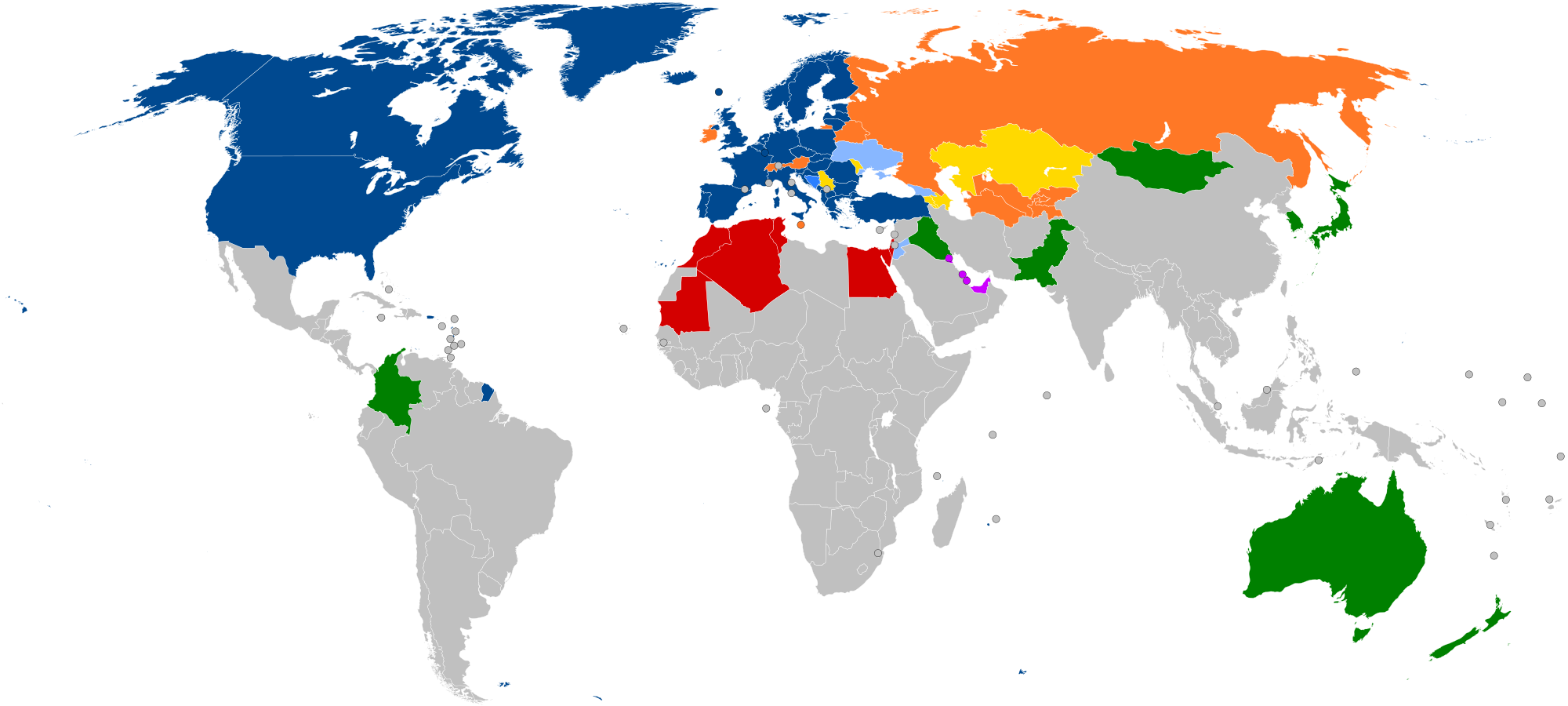
Such partnership frameworks include The Mediterranean Dialogue (MD) and the
Istanbul Cooperation Initiative (ICI), through which NATO provides assistance to
eleven partner countries in the region to help them modernize their defense establish-
ments and military forces (Algeria, Egypt, Israel, Jordan, Mauritania, Morocco, Tuni-
sia – for the MD, and Bahrain, Kuwait, Qatar and the United Arab Emirates – for the
ICI).


2.3. Strategies of improving the NATO policies

NATO is facing a new world with new challenges. During the Summit there were
expressed concerns vis-à-vis the NATO relations with the EU and it strategies regar-
ding emerging technologies and their applicability in the military domain.

Only five of the current twenty-eight member states meet the NATO guideline to
spend a minimum of 2% of their Gross Domestic Product on defense (Art. 34).

The NATO Secretary General, the President of the European Council, and the Presi-
dent of the European Commission issued a joint declaration in Warsaw, which outli-
nes a series of actions the two organizations – NATO and the EU – intent to take to-
gether in concrete areas, including countering hybrid threats, enhancing resilience,
defense capacity building, cyber defense, maritime security, and  exercises (Art. 122).

NATO recognizes the importance of a stronger and more capable European defense,
which will foster an equitable sharing of the burden, benefits and responsibilities of
Alliance membership (Art. 124).

In the fight against terrorism, NATO will continue to improve capabilities and tech-
nologies, including defending against improvised explosive devices and chemical,
biological, radiological and nuclear (CBRN) threats, and enhance cooperation in ex-
changing information on returning foreign fighters (Art. 134).

For acquiring NATO capabilities, a stronger defense industry across the Alliance re-
mains essential. This includes small- and medium-sized enterprises, greater defense
industrial and technological cooperation across the Atlantic and within Europe, and
a robust industrial base in the whole of Europe and North America (Art. 136).

It was convened that the next meeting would be held in 2017, at the new NATO
Headquarters in Brussels.


3. Odd allies

It was expected that after Russia’s land invasions in Georgia (Abkhazia and South
Ossetia, in 2008), Ukraine (Crimea, in 2014), and air space violations in Norway
(in 2015), the Baltic nations, and Turkey (in 2016), NATO would come in stronger
terms in communicating with this country. And indeed, the Communiqué contains
formulas likely to suggest that, until Russia’s actions do not demonstrate compli-
ance with international law and its international obligations and responsibilities,
there cannot be a NATO return to “business as usual.”

And still, France and Germany have acted one more time as odd allies, in a visible
and disturbing discrepancy to the approaches coming from the U.S., the NATO Se-
cretary General, and the other member states.

Thus, the French president, François Holland, adopting a lamentable dovish attitu-
de, insisted that Russia is “a partner,” not “a threat.” Moreover, he insisted that “NA-
TO has no role at all to be saying what Europe’s relations with Russia should be. For
France, Russia is not an adversary, not a threat.” This stance has not remained with-
out practical consequences. France insisted that the U.S. be removed from the coor-
dination of the Aegis Ashore site in Deveselu, Romania, although the U.S. built the
European missile-defense system, and the command and control be transferred to
NATO (see Art. 57).   In addition, another compromise was made: by deploying the
four battalion-sized battle groups in the Baltic States and Poland on a rotational, not
permanent, basis (see Art. 40).

On the other hand, both the German and French foreign ministers, Frank-Walter Ste-
amier and Jean-Marc Ayrault, insisted on the argument that Europe should strength-
en its defense role,  creating irritation and worries to the U.S. and Canada, who fear
that Europe would duplicate the NATO military structures.

In order to counter-balance the anti-productive positions of the French and the Ger-
mans, the NATO Secretary General, the Norwegian Jens Stoltenberg, felt complied
to clarify that the Alliance should “stand together” and have a homogeneous policy
on Russia. He distanced himself from Hollande’s position, saying that at this mom-
ent NATO is in an entirely new situation: “[W]e are not in the strategic partnership
with Russia […] but we are neither in a Cold War situation” and that “we are in a
new situation which is different to anything else we have experienced before.”

With enemies like Hollande and Steinmeier, who needs friends for Putin’s Russia?


4. Impact of the Warsaw NATO Summit for the United States

For the U.S., in general, and President Barack Obama, in particular, the Summit
meant a limited success. The limited success consists of:

(4.1.) Deploying a U.S. armored brigade of 1,000 troops in Poland next year, to
strengthen the NATO’s Eastern flank. This is considered the most important mo-
ment for the Alliance since the end of the Cold War.

(4.2.) Deploying, in addition, three rotational – not permanent – NATO battalions
on the Eastern flank, close to the Baltic Sea, in the Baltic states of Estonia, Latvia,
and Lithuania. The United Kingdom, Germany, and Canada will coordinate these
battalions and will send around 500 troops for the battalions under their command.
This is regarded as the largest dislocation of troops NATO had had since its incep-
tion, in 1949. Some skeptics have considered this an unjustifiable measure, and as
a symbolic gesture, offered by the major member of the Alliance, namely the Uni-
ted States, to its smaller East European allies.  This is not the case. There are far fe-
wer reasons to believe that Russia, who did not attack NATO when it had 7 (later
6) Warsaw Pact allies, for the whole duration of the Pact, would do it now, when
all its former allies (indeed, small, but very determined) have switched sides.

(4.3.) Inviting Romania to coordinate a multinational battalion, consisting of 1,000
Romanians, 500 Bulgarians, and 500 multinational troops, on the Southern flank,
close to the Black Sea (as a result of the talks between the Alliance and the Roma-
nian President Klaus Iohannis).

(4.4.) Admitting Montenegro as the NATO’s twenty-ninth member. Montenegro,
tiny as it is, and in spite of some skeptics’ opinions,  secures the junction, on the
Adriatic Sea coast, between the other two recent NATO members, Albania and
Croatia (full members since April 1, 2009, after they were invited to join at the
2008 Bucharest Summit). Montenegro blocks effectively Russia’s access –
through Serbia -- to the Mediterranean Sea.

(4.5.) Implementing a plan sustaining Ukraine.

(4.6.) Continuing the supply to Afghanistan, where NATO retains a component
of training and security.

(4.7.) Issuing a NATO – E.U. joint declaration on security cooperation in the fi-
elds of hybrid warfare, cyber warfare, and joint maritime operations to prevent
illegal migration, where the United States is equally interested.


5. NATO and the Caribbean region

If one cannot see the connection between the powerful military organization and
the Caribbean, think no further than the Cuban Missile Crisis.

In late March and April 2006, the Standing NATO Maritime Group One (SNMG-
1),  one out of four of NATO’s maritime groups, engaged in presence operations 
around the Caribbean Sea.  It was the first time NATO has ever deployed for pres-
ence operations to the Caribbean.

These operations are designed to build maritime situational awareness and dem-
onstrate NATO’s capability to deploy and sustain forces at strategic distances. Tr-
aining exercises (including anti-submarine, anti-air, and anti-surface warfare exer-
cises) have been used as evaluation exercises for military missions in Northern Eu-
rope (e.g., the Noble Mariner evaluation exercise). There have been also humanita-
rian missions, including tasks to do assistance missions with ships that provide doc-
tors and nurses as a non-government support in disaster areas, or provide security,
so the crew could safely go ashore to help, or provide medical, water and food sup-
port for small towns in the area. In other circumstances, supply ships (like the British
ship Wave Ruler, part  of the SNMG-1) are prepared to evacuate people in case of
volcano eruptions (like in the case of the volcano La Soufriere on the island of Mon-
tserrat).

While some might consider the Caribbean still “an American lake”, in the spirit of
the1823 Monroe Doctrine,  and, consequently, a war free-risk zone, it is not only
themilitary component that may help the region prosper.

James, Stavridis, a former NATO Supreme Allied Commander (2009-2013), and
commander of the U.S. Southern Command in Miami, Florida (which he called “the
true capital of the Caribbean and Latin America”) proposed several directions of ac-
tions for the U.S. regarding the Caribbean Sea and basin, including:  building local
partnerships through economic, political, cultural, and security cooperation; revita-
lizing the Caribbean Basin Initiative, with the focus on collective action; involving
the U.S. Southern Command in training local forces and providing resources to im-
prove the rule of law, basic investigative work, advanced anti-corruption techniques,
surveillance, intelligence, and human rights, and not limiting on the “war on drugs”;
bringing together the diasporas from the regions living in the U.S. today, for resour-
ces and business experience (the Cuban-American community, the Puerto Rico and
the Caribbean diasporas); intercooperation with the continental partners of Canada
and Mexico; developing a collective Caribbean strategy, in cooperation with the U.S.
federal agencies; last, but not least, developing the so-called “track two” diplomacy,
by coupling private sectors together, through educational reforms, programs in the
arts, sport diplomacy, and medical exchanges (e.g., a series of baseball clinics cond-
ucted by the U.S. troops, and financed partly through public sector donations from
Major League Baseball teams). For more details, see his article on How Captain Jack
Sparrow Explains the Problem with ‘America’s Backyard’, published in Foreign Pol-
icy on February 1, 2016.


6. Post-NATO Summit Challenges

The Warsaw NATO Summit 2016 was President Obama’s last NATO summit and,
possibly, his last trip to Europe before his second mandate would come to an end
by January 2017.

The aforementioned limited success has been overshadowed by the tragic events
on the domestic front in Dallas, Texas, where on July 9, the last day of the Warsaw
Summit, five police officers were killed during a protest demonstration by an angry
African-American sniper, a military veteran who had served in Afghanistan.

Later, on July 14, the French National Day, a truck driver (a Tunisian national, re-
sident in France), by shooting while driving and vehicle ramming, killed over 80
people and injured more than 300, in the French Riviera city of Nice.

Soon after that, on July 15 to 16, an unsuccessful coup d’état took place in Turkey,
one of the NATO major allies, as a reflection of the fundamental division that exists
in the Turkish society of today between secularists (some within the country’s top
military brass) and Islamists (including President Recep Erdogan’s AKP party). As
a result, the southern Turkey Incirlik air base, used by the U.S., was temporarily
closed.

All these post-NATO summit events demonstrate one more time how fast an orga-
nization like NATO needs to reform itself, in order to be able to respond effectively
to the increasing number of military and terrorist related events, organized by groups
of a radical Islamist inspiration.


TIBERIU DIANU is a scholar and author of several books and articles in law and post-communist 
societies. He studied law, human rights, and criminal justice at the universities of Bucharest (Roma-
nia), Strasbourg (France), Oxford and Manchester (U.K.), American University (Washington, DC), and 
University of Maryland at College Park (Maryland). He currently lives in Washington, DC, where he 
teaches languages and cultures for the U.S. military and diplomatic personnel through various govern-
ment and private agencies. 

The opinion expressed in the preceding article are exclusively those of the author, and do not nece-
ssarily represent those of The Puerto Rico Monitor, its editors or advertisers.


Wednesday, June 29, 2016

Post-Brexit In The Western Hemisphere


Feature

Tiberiu Dianu


Brexit: The Message

On June 23, 2016, the majority of the United Kingdom’s population –
52% vs. 48% (outside the margin of error, that is) – has decided to
vote for exiting the European Union (turnout was 72%). Apparently,
the vote was marked by a generational divide. Recent polls, starting
with 2015 to date, have shown that 75% of voters aged 18-24 were
pro-stay, while 67% of voters 65 years and older were pro-leave. As
an addendum, the British overseas territories had no say in the Thurs-
day referendum.

In practical and rhetorical terms, this means a vote for: nationalism, in-
dependence, and border security. Consequently, this means a vote again-
st: globalism, Brussels’ bureaucracy, and immigration. It meant also a vo-
te for true freedom of speech, individualism, and assimilationism, and, co-
nsequently, a vote against political correctness, establishment, and multi-
culturalism.

Brexit does not reflect an over-night change in people’s vision, but ra-
ther an embryonic state since the 1973 accession of the UK to the EU,
adding in time layers of dissatisfaction and  frustration. This has evol-
ved from economic issues (trades and tariffs) to national security issues
(the Islamic terrorist attacks in London between 2005 and 2015,  Paris,
in January and November 2015, and Brussels, in April 2016, committed
by either citizens or immigrants, including political refugees).

What's next? Procedure of leaving the EU

Brexit is an advisory vote, and the British government can legally ignore
the referendum results. But the political reality will push the executive to
respect the popular vote. The UK will not exit the EU next week, or next
month, and not even next year. It is a process in the making, and it might
take at least two years until it will have become complete. There are many
issues to be clarified, readjusted, renegotiated, and reconstructed related to:
trade, currency, citizenship, governance, and security, among others. Even
the replacement procedure for the outgoing premier David Cameron will
take at least two months or even longer.

Art. 50 of the 2007 Lisbon Treaty on European Union establishes the pro-
cedures for both withdrawal and rejoining. In short, the executive head (pre-
mier, for the UK) of the member state which decides to withdraw shall no-
tify the European Council (the EU executive branch) of its intention, and
the EU “shall negotiate and conclude an agreement with that member state.”
The agreement shall be concluded by the Council, with a qualified majori-
ty of the member states, after obtaining approval from the European Parlia-
ment.

Then, the EU treaty shall cease to apply to the member state in question fr-
om the date the agreement is enforced. However, if the agreement is not acc-
epted by the British people, a second referendum might be held, in order to
see if the voters accept the negotiated agreement. If the voters do not accept
the agreement, there is the possibility for the UK to leave the EU unilaterally,
by rejecting the negotiations. But forcing the exit without agreed terms might
put the UK in a risky position, leaving it, for instance, without a free trade ag-
reement, and being imposed of tariffs on some UK-EU trade. In this last situa-
tion, the EU treaty shall cease to apply to the member state in question within
a two-year period after the notification of that member state.

The idea of a second referendum seems to be favored by Boris Johnson, the
presumptive Conservative leader. Johnson, a former London mayor, has ad-
vocated for Brexit, unlike David Cameron and the current mayor and Trump-
detractor, Sadiq Khan (now copiously booed by the over-joyous Brexiters).
Curious enough (or maybe not), Johnson bears a striking resemblance, not
only in ideology, but also in looks, with Donald Trump. Who, by the way,
during the British referendum, was nearby, in neighboring Scotland, in ord-
er to promote his golf courses, and praised the Brexiters for their victory.

Post-Brexit for the United Kingdom

Brexit has given the UK the possibility to emerge as a new power pole in
global politics. Not that the UK was not a great power before. But now, fo-
llowing a divorce from the EU, the British will focus on creating a renew-
ed architecture from the (former British) Commonwealth of Nations. We
will see in the near future more actions that advocate for more UK engage-
ment with overseas territories, in terms of sustainable development, ocean
governance, immigration, and social issues. These steps will continue pre-
vious similar initiatives, that emerged in the early 2000s.  It has to be men-
tioned that the British overseas territories were not part of the referendum
vote.

After the Brexit vote, an immediate effect of Brexit was on the stock exch-
ange and the British pound. My earlier prediction came true, and the pound 
took a significant plunge, by about 8%, to its weakest level in three decades
-- from US$1.57 on Friday, June 26, 2015 to US$1.36 on Friday, June 24,
2016, and US$1.33 in the last days of June.  Globalists should not jubilate,
though. In spite of the initial shock of the stock exchange market, this will
not have long-lasting effects. Most of the large UK stock market compone-
nts (like banks and commodity stocks) will be, in large part, unaffected by
the country’s relationship with the EU, while many British export compan-
ies would benefit from a cheaper pound.

In terms of commerce, the UK can cut trade deals with the EU and other
partners outside the EU. But ultimately, if no deal would be forthcoming,
the country could also cut import duties on its own.

Militarily, the UK has signaled to its NATO allies that national interests are
to be given increased attention over the EU ones.  The EU interests include
Eastern Europe, the Middle East, and elsewhere. Consequently, the country
has shown less inclination to take on global challenges, at least in the short
term. It is also a signal for reviewing NATO’s role, construction, principles,
and goals. It is expected that the upcoming NATO summit in Warsaw, on
July 8 and 9, to reflect exactly that.

Post-Brexit for the United States

On political discourse level, Brexit serves as a predictor for the US presid-
ential elections in November. The debate has been about anti-establishment
bureaucracy and status quo, nationalism, sovereignty, and borders control,
and all these factors are present in the American elections narrative, as well.

Financially, in short and medium terms, Brexit will affect the US dollar, sto-
cks and bonds. The dollar rise (compared with both the pound and euro) will
limit the US exports in Europe. Retirement funds invested in stocks will also
be affected, while treasury bonds will decrease their ability to deliver signifi-
cant income for savers and investors.

The good news for investors is that the Federal Reserve will not raise the sh-
ort-term interest rate (now it is between 0.25% and 0.5%), probably until the 
end of the year.

Mortgage rates and house prices will drop, and the US housing market will
reinvigorate. Tourism in Europe will intensify.

On national security grounds, the US will have the opportunity to enhance
its cooperation with the UK within the  Five Eyes (in short, FVEY) intellig-
ence organization. FVEY, an intelligence alliance established in the last yea-
rs of the World War 2, includes other three English-speaking members (Can-
ada, Australia, and New Zealand). This is important to point out, because the
other EU member states (in particular, France and Germany) have, more oft-
en than not, other regional interests than the US and the rest of the FVEY
members.

Regionally, the Western Hemisphere will have two -- more defined -- major
players, the United States and the United Kingdom. They will divide, to the
most part, the vast areas of the north Atlantic region, the Caribbean basin,
and the Pacific zone.

Post-Brexit for the Caribbean and Pacific nations

In a post-Brexit era, some British commonwealth nations (American/Carib-
bean, African, Asian, and Australian/Pacific) will take concrete measures, in-
volving new forms of association, depending on their own regional – politi-
cal, administrative, economic, and trade -- interests.

North America and Oceania have a total number of members of 23 nations
in the British Commonwealth. Predicting economic and trade trends for all
these English-speaking countries is important because with Brexit another
world power pole emerges, namely a redesigned (British) Commonwealth
of Nations. And Brexit is the first brick in the new architecture of this nati-
ons bloc.

The British Commonwealth has 12 member countries in North America:
Canada and 11 Caribbean nations (Antigua and Barbuda, Bahamas, Barba-
dos, Belize, Dominica, Grenada, Guyana, Jamaica, Saint Kitts and Nevis,
Saint Lucia, Saint Vincent and the Grenadines).

The Caribbean nations (in North, Central, and South America), on their part,
possess a wide array of regional economic organizations, but we will empha-
size in particular two of them: the Association of Caribbean States (ASC),
with 25 full members, and the Caribbean Community (CARICOM), with 15
full members..A large part of them are English-speaking countries. The Engl-
ish-speaking countries are: parliamentary constitutional monarchies (domin-
ions or independent states, like Antigua and Barbuda, Belize, and Jamaica) –
with Queen Elizabeth II as their monarch and head of state – , republics (like
Dominica, Guyana, Trinidad and Tobago), and Dutch territories with English
as the official language, in addition to Dutch (like Sint Maarten).

These differences can make a difference in terms of trade with a post-Brexit
UK, on one hand, and the EU, on the other hand. The Caribbean English mon-
archies have a stronger connection with London, hence a narrower leverage of
negotiation with the EU, other states or trade blocs. In contrast, the Caribbean
republics, including the Dutch English-speaking territory of Sint Maarten, can
exercise more flexibly their negotiation leverage with other states, due to their
loose connection with London.

In the last years, the 15 CARICOM countries (Antigua and Barbuda, Bahamas,
Barbados, Belize, Dominica, Grenada, Guyana, Haiti, Jamaica, Montserrat,
Saint Kitts and Nevis, Saint Lucia, Saint Vincent and the Grenadines,Suriname,
Trinidad and Tobago), and the Dominican Republic (with which they make up
together CARIFORUM) have been strengthening their ties with each other, in
order to play a more solid role in global trade. Also, they are in a process of ex-
tending their trade connections with 17 territories in the Caribbeans with direct
links to some EU countries (4 French "outermost regions" plus 13 "overseas te-
rritories" -- 6 British, 6 Dutch, and 1 French).

In a post-Brexit era, the Caribbean nations, on their part, will need to enhance
and improve the free trade agreements they currently have with the EU (like
CARIFORUM), North America (NAFTA), South Asia, and other regions.

The Pacific nations (in Oceania) have 11 member states in the British Common-
wealth. Five of them are monarchies – with Queen Elizabeth II as their monarch
and head of state (Australia, New Zealand, Papua New Guinea, Solomon Islands,
and Tuvalu), one is a monarchy with its own monarch (Tonga), and five republics
(Fiji, Kiribati, Nauru, Samoa, and Vanuatu).

Because of the small amount of land and limited resources (except Australia,
New Zealand, and Papua New Guinea), the trade relations of the Pacific nations
consist of economies in transition to a developed economy and infrastructure.
The smallest Pacific nations rely on trade with Australia, New Zealand, and the
United States for exports of goods and accession to other products (like cars, el-
ectrical equipment, machinery, and clothes).

The main trade blocs of the area are the Asia-Pacific Economic Cooperation
(APEC) and the East Asia Summit (EAS). Currently, APEC has 23 members
(among them, Australia, New Zealand, and Papua New Guinea), while EAS has
18 members (including Australia and New Zealand). A Pacific Island Countries
Trade Agreement (PICTA) is in the process of being implemented by 2020. The
aforementioned remarks, related to trade impact on the countries’ different status
(monarchy with British monarch, monarchy with own monarch, and republic),
remain valid for the Pacific nations, too.

Post-Brexit for the European Union

The EU has been developing its own bilateral trade agreements, or is in negotia-
tion for such agreements, with the English-speaking Caribbean nations, and also
with Spanish-speaking nations in the area, like Dominican Republic and Puerto
Rico. After the US, the EU is CARIFORUM's second largest trading partner.

Post-Brexit could mean different things for different territories. For instance,
there are some UK territories – like the Cayman Islands -- that receive signific-
ant support from the EU (e.g., a new radar system, which plays an important role
in the area’s hurricane data). Cayman will be a different issue, due to its challen-
ges in the financial services sector. Caymanians holders of UK passports will face
limitations of freedom to live, work or study in Europe, compared with the prev-
ious period.

As for the Pacific nations,  the EU has free trade agreements with Fiji, New
Caledonia, Papua New Guinea and Solomon Islands, and agreements in nego-
tiation with New Zealand.

The EU is also negotiating a comprehensive Economic Partnership Agreement
with all Pacific nations, building on its interim agreements with Fiji and Papua
New Guinea.

“The Times They Are A Changin’”

The choirs of lamenters were always right on short term. But in the long run,
new horizons will always be in front of us. Most probably, the UK will smoo-
thly slide, with a renewed – non-European -- leader role, into its (British) Co-
mmonwealth of Nations (established in 1931), and will be evolving from now
on as a new world political power pole.

Precedents like the Swiss confederation or the former British empire have pro-
ven durability in time to us, provided that a majority of people involved is ready
to sustain such political constructions. And Brexit has succeeded exactly becau-
se a majority of people involved has indicated such sustainment.

Nowadays we are witnessing world changes again. So far, the UK has been con-
sidered by some to be the EU’s fifth wheel of the cart, but in a post-Brexit era it
has all the chances of becoming the Commonwealth of Nations’ first wheel of
the bicycle.

If in the future Brexit were to serve as an example for similar movements --
like Byegium, Czechout, Deportugal, Donegary, Finish, Italeave, Latervia,
Nexit (or Nethermind), or Oustria --, this would be an issue that remains to
be confirmed.


Tiberiu Dianu is a legal scholar, book author, graduate of the American University Washington 
College of Law in Washington, DC, the University of Manchester Faculty of Law in Manchester, 
UK, and an exchange scholar of the Oxford University in Oxford, UK. He currently lives in Wa-
shington, DC and works for various government and private agencies. The opinions expressed
in the preceding article are those of the author alone and do not necessarily represent the views 
of The Puerto Rico Monitor, its editors or advertisers.


Tuesday, June 21, 2016

A Brexit Round Trip Across The Pond: To Be or Not To Be?


Commentary

Tiberiu Dianu


That is the question. On June 23, the United Kingdom will vote either to remain
in the European Union, or to leave it, the so-called “Brexit.”

Not such a long time ago, the camp of the status quo supporters seemed robust.
But lately, polls have shown trends reversals, in the sense that Brexit has actually
gained momentum. In May 2016, An Ipsos MORI telephone survey showed a 55
 to 37 ratio of voters for the status quo (with the rest being undecided) , while a
June 16 survey indicated a 53 to 47 ratio (with no undecided) for the Brexit -- also
known as “No, thanks” supporters.

No matter what the final results will be, changes are expected within the EU poli-
tical construction.


Why do the Brits want to exit the EU?

There are several reasons. The UK itself used to be, in its colonial times, and still
is, as a (formerly British) Commonwealth of Nations, a political construction much
larger that the EU itself. Then, as a “mother country” for the US, it has been consi-
dered by many as the European turntable for America (or the other way around, de-
pending on whom you talk with). In addition to that, the UK is a nuclear power. Oth-
er reasons include: satiety for the Brussels bureaucracy; distaste for the German-Fr-
ench dominance of the EU, with both of them being in a visible rapprochement with
Russia; and growing impatience with the EU, who constantly bails out member sta-
tes, less responsible financially, from their enormous debts (like Greece). While “Gr-
exit” was conceived as an EU sanction (but never applied), Brexit represents a local
parliament initiative conceived, among others, to halt (at least for London) the conti-
nuous flow of assets and resources from the nations of makers to the nations of takers.
Given the circumstances, it comes as no surprise that many British citizens’ attitudes
toward the EU mirror similar American  feelings, harbored against deals like NAFTA
or Trans-Pacific Partnership (TPP).


The Advent of Brexit

The British eurosceptic politicians have constantly advocated alternatives to the
UK membership in the EU. One of them was a Commonwealth free trade area. The
concept of a Commonwealth free trade area has been popularized by eurosceptics
well in advance the 2016 referendum, as a variant for a free trade treaty with the
EU.

On January 1, 1973, the UK and Gibraltar joined the EU (known then as the Euro-
pean Economic Community) under terms negotiated by the Conservative govern-
ment, then in power, through its leader, Edward Heath. The 1974 elections were
won by the Labor Party, who formed a minority administration and held a referen-
dum on continued membership in 1975, which was approved by 65% of the voters.
However, since withdrawal from the EU is a right of the member states, stipulated
by Article 50 of the 2007 Treaty on European Union, eurosceptic British Parliament
members have been having constant calls for a new referendum.

A 2010 report (see: The Royal Commonwealth Society: A Working Paper, pp. 
8-9)  has shown that: intra-Commonwealth trade (between members), is up to 50%
more than with a non-Commonwealth member; and smaller and less wealthy states
(like island members in the Caribbean and Pacific) have a higher propensity to trade
within the Commonwealth.

In 2012, the British eurosceptics had proposed already a Commonwealth free tra-
de zone,  although, at that time, such an idea had been labeled as “the ultimate Eu-
rosceptic fantasy.” On January 23, 2013, the Conservative prime minister David
Cameron proposed in his “Bloomberg speech”a renegotiation of the terms of the
UK membership and a new referendum on the EU membership.

In 2015, the UK Parliament passed the European Union Referendum Act, which
makes provision for the holding of a referendum no later than December 31, 2017.
Let us imagine several post-June 23 scenarios...


If the status quo prevails

We refer to an impact analysis on four levels: domestic (for the UK), regional (wi-
thin the EU), transatlantic (with the US), and international (which includes the Bri-
tish Commonwealth nations, and the world). Domestically, there is to be expected
a moderate -- more political than financial -- impact. The British political parties
will justify the results in their own way, and adjust their short- and medium-term
actions accordingly. The Bank of England will probably not intervene in sustaining
the sterling pound, although some “bulls and bears” might shake a bit the London
Stock Exchange after Friday, June 24.

Regionally, the UK will try to redefine its status within, and relationship with, the
EU based on the robustness of the victory percentages, or the lack thereof.

Bilaterally, with the US transatlantic partner, this will mean a folding on President
Obama’s position for the status quo, emphasized during his April meeting in Lon-
don with prime minister Cameron.

Internationally, with the UK remaining in the EU, other countries (the British co-
mmonwealth nations in particular, but also Russia and China) will perceive it as a
sign relative stability, in areas where social unrest and separatist movements emer-
ge from  time to time.


If Brexit prevails

An impact analysis applied to the same levels (domestic, regional-continental,
transatlantic-bilateral, and international) will reveal the following possible tre-
nds. Domestically, the sterling pound will plunge, in varied modulations: a good
reason for the Bank of England and other departments (British ministries) to inte-
rvene with emergency plans, based on their own money reserve availability. An-
other problem is the situation of the 1.3 million British residents in other EU co-
untries (especially in Spain, Ireland, and France), whose status should be clarifi-
ed in the near future by both  the British and EU authorities. Last but not least,
the British government will have to appoint more experts for the trade negotia-
tions with the EU.

Regionally, several EU leaders, including Italy’s center-left prime minister Ren-
zi, warned that Brexit would be a path of no return.  Other EU nations will put
in question the legitimacy of both the British euro-parliament members, and Eu-
ropean Commission experts. Some EU states will probably push for some deci-
sions to be taken, without the UK’s participation, where a unanimous vote is not
required. Symmetrically, the EU residents’ status in the UK will have to be clari-
fied (some of them will opt to stay, since later returns may prove more difficult).

Bilaterally, with the US, the British exit decision will probably receive mixed
signals, since the US itself is in full electoral swing this year. While the current
US administration may hint that a withdrawal could render the UK a less valua-
ble NATO ally, the US conservative circles may actually welcome the decision
and perceive it as an enhanced opportunity for a more flexible bilateral military
relationship with the ally across the pond.

Internationally, Brexit could seriously impact the surge of other European sepa-
ration movements, like in Scotland (the Scots are pro-EU), and Catalonia (the
Catalans are also pro-EU, but so are the Castilian people). In the case of these
two nations, if separations succeed, new negotiations and arrangements will be
necessary for their re-accession to the EU.

Elsewhere in the world, some British commonwealth nations (American/Caribb-
ean, African, Asian, and Australian/Pacific) will take concrete measures, of asso-
ciation or disassociation, depending on their own regional – political, administra-
tive, economic, and trade -- interests.


The Caribbean nations in a post-Brexit era

A special note for the Caribbean nations, since many of them are English-speak-
ing countries, and members of the (former British) Commonwealth of Nations. It
is important to predict possible post-Brexit economic and trade trends for all Eng-
lish-speaking countries, and particularly the Caribbean nations. The reason is a ve-
ry important one. Which is this: if Brexit occurs, we will have another world power
pole, namely the British Commonwealth redesigned. In other words, Brexit will be
the brick in the new architecture of the British Commonwealth of Nations.

The Caribbean nations, on their part, possess a wide array of regional economic
organizations, but we will emphasize in particular two of them: the Association
of Caribbean States (ASC) and the Caribbean Community (CARICOM).

ASC has 25 full member states, (initially 7, but currently) 12 associate member
states, and 20 observer states. CARICOM has 15 full members, 5 associates, and
8 observers. A large part of them are English-speaking countries (aside from the
Spanish-speaking, French-speaking, and Dutch-speaking countries). The English-
speaking countries fall into several categories: parliamentary constitutional monar-
chies (dominions or independent states, like Antigua and Barbuda, Belize, and Ja-
maica) – with Queen Elizabeth II as their monarch and head of state – , republics
(like Dominica, Guyana, Trinidad and Tobago), and Dutch territories with English
as the official language, in addition to Dutch (like Sint Maarten).

These differences may prove more or less important in terms of trade with a post-
Brexit UK, on one hand, and the EU, on the other hand. The Caribbean English mo-
narchies may have a narrower leverage of negotiation with the EU and other states
or group of states, due to their stronger connection to London. In contrast, the Cari-
bbean republics, including the Dutch English-speaking territory of Sint Maarten,
due to their loose connection with London, may actually exercise to a much larger
extent their margin of negotiations with the other world state entities.

In a possible post-Brexit era, the Caribbean nations, on their part, will need to en-
hance and improve the free trade agreements they currently have with the EU (like
CARIFORUM), North America (NAFTA), South Asia, and other regions.

On the other hand, the EU itself has been developing bilateral trade agreements,
or is in negotiation for such agreements, not only with the English-speaking Cari-
bbean nations, but with Spanish-speaking commonwealths, like Puerto Rico.

In conclusion, the time for an honest and efficient answer has come. The question
is: to what point the political constructions, based on inclusion adopted on the ex-
pense of national and local value differences, are viable and durable? Will a conti-
nuous reform work, or dismantling is the solution? Obviously, the British referen-
dum will put this to the test, and provide us with a long-awaited answer.


Tiberiu Dianu is a legal scholar, book author, graduate of the American University Washington 
College of Law in Washington, DC, the University of Manchester Faculty of Law in Manchester, 
UK, and an exchange scholar of the Oxford University in Oxford, UK. He currently lives in Wa-
shington, DC and works for various government and private agencies. The opinions expressed
in the preceding article are those of those of the author alone and do not necessarilly represent
 the views of The Puerto Rico Monitor, its editors or advertisers.


Tuesday, June 14, 2016

The Lesson We Refuse To Learn: The Case of Orlando, Florida 2016


Commentary

Tiberiu Dianu


So, it happened again. On June 12, 2016, another Muslim militant, this time 
Omar Mateen, an American citizen of an Afghan origin, a self-declared ISIS-
inspired fighter, and a registered Democrat (a detail the press does not want 
to emphasize), opened fire in a gay club in the city of Orlando, Florida, kill-
ing 50 people and injuring other 53 (to date) in what is now being called “the 
deadliest mass shooting in the United States and the nation’s worst terror 
attack since 9/11,” according to authorities. 

In the period 2008-2016, overlapping comfortably the Obama’s two presi-
dential mandates, several mass shootings took place in the United States, 
with casualties ranging from 12 to 50 dead and 1 to 58 wounded. Let us re-
cap the most notable ones:  Binghamton, New York and Fort Hood, Texas 
(both in 2009), Aurora, Colorado and Newton, Connecticut (both in 2012), 
Washington, DC (2013), Fairfax, Virginia (2014), Charleston, South Caro-
lina and San Bernardino, California (2015), and finally, Orlando, Florida 
(2016).

Some of them were committed by people unsatisfied with their own life, 
but others were cold-blooded executions in the name of Jihad.

And again, the same sickening mass-media’s post-fact scenario repeats 
itself. The (fill in the blank with ABC, NBC, MSNBC, CNN or FOX) network 
anchor asks the field reporter: “So, tell me about the reactions of the people 
over there” and the reporter goes: “Well, everybody is in a state of shock!” 
After which the network anchor concludes: “Our prayers go to the victims of
...(fill in the blank with the name of the city where the massacre took place).”

I am beginning, for one, to become sick and tired of this crêpe (pardon my
French!). The same thing has been happening over and over again during the
last eight years, with us being “in the state of shock” and sending “prayers to
the victims.” Until when, if I may ask? I am not shocked any more, I am extre-
mely angry. And, no, in my outgrowing cynicism, I do not want to send prayers
to the victims anymore, but instead I want their terrorist attackers to be punished 
according to the military law. And more importantly, I want to see the leaders 
of this country admitting for once the cause of these mass killings, with no po-
liticking spins.

We are living in a perpetual state of denial, where the president of the Republic 
(the lame-duck Barack Obama) keeps on preaching us about “workplace viol-
ence” or “acts of hate,” but refuses to call the shootings for what they are, that 
is “Islamic terrorist acts” when the case applies.

When I was little, my grandmother told me a story about a donkey (not the De-
mocrat one, although it was possible) who, once lost in a dark forest, saw at a 
certain distance behind him what appeared to be the eyes of a wolf, but he refu-
sed to think it might actually be one. When the creature got closer, the donkey
saw his open jaws and rabid fangs but he reassured himself: “No, it’s not the wo-
lf, it cannot be the wolf!” And then, when the wolf planted his teeth into the poor 
donkey’s leg, the donkey yelled: “No, I don’t think it’s the wolf, it cannot be!”
But, finally, when the wolf stuck his fangs into the donkey’s neck, the donkey 
began to roar: “It’s the wooolf! Help! It’s the wooolf!” Sadly for the donkey,
there was no one around to help him anymore.

This coming November we will have to make up our minds and decide if we 
want to play donkeys or not, and who the wolf is.


Tiberiu Dianu is a legal scholar, book author, graduate of the American University Washington 
College of Law in Washington, DC, the University of Manchester Faculty of Law in Manchester, 
UK, and an exchange scholar of the Oxford University in Oxford, UK. He currently lives in Wa-
shington, DC and works for various government and private agencies. The opinions expressed
in the preceding article are those of those of the author alone and do not necessarilly represent
 the views of The Puerto Rico Monitor, its editors or advertisers.

Wednesday, June 8, 2016

The District of Columbia Statehood Issue: Why The National Capital Cannot Be a State Nor a Territory


Washington Post


Commentary

Tiberiu Dianu


Recently, there have been several attempts to assimilate the District of Co-
lumbia status to the one of a US territory. In the midst of a presidential elec-
tion year, the DC Mayor Muriel Bowser, a Democrat, intends to prepare a 
statehood package for the District of Columbia when the new administrati-
on takes office, irrespective of who wins in November. Supposedly, this is 
“a new front in the District’s long-running fight for equal rights.” [1]

When asked about this, the former Republican presidential hopeful John Ka-
sich opined that this would be “just more votes in the Democratic Party.” [2]
 This approach was seen by some as precarious vis-à-vis the almighty “Taxa-
tion without Representation” slogan. On the contrary, Hillary Clinton grabbed 
the opportunity, and promised to be "a vocal champion" for DC statehood just 
weeks before the city's presidential primary. [3]

Let’s try to figure out if there is any elephant in the room. On the face value, 
sure, why would the DC residents not have their own representatives in the 
Congress, since they – don’t we all know? – pay (federal) taxes, go to war 
and fulfill other citizenship duties. As a twenty-plus-year resident in the Dis-
trict, I say: it’s not going to happen. Not anytime soon.

Here are several reasons.

-The absence of political will at the top: Washington, DC has been a city 
dominated by Democrats and a Republican-dominated Congress will never 
allow several Democratic congress people showing out of the blue. In addi-
tion, Maryland and Virginia Democrat representatives (let alone their Repu-
blican colleagues) do not want a DC commuter tax imposed on their own re-
sidents;

-The lack of viability as a state: DC does not have the means nor resources 
to sustain a viable territory or economy in order to protect its residents within 
its borders; that aside, if the new state would exclude a small federal enclave 
(as proposed, in an attempt to avoid a constitutional amendment), this would 
reduce its territory to a new minimum;

-The inexistence of an independent budget: according to the Article I of the 
Constitution, the Congress has the power to Exercise exclusive Legislation in
all Cases whatsoever” over the District. Although the DC representatives (in-
cluding the current mayor) have threatened to pass budget autonomy laws, fe-
deral judges have constantly stricken down such initiatives over the years (see
 in 2014, for that matter), ruling that only Congress can act;

-The absence of such an express provision in the US Constitution: according to 
the Article IV, Section 3, Clause 1, the Constitution empowers the Congress to 
grant statehood, while Clause 2 stipulates that “The Congress shall have Power
to dispose of and make all needful Rules and Regulations respecting the Terri-
tory or other Property belonging to the United States; and nothing in this Cons-
titution shall be so construed as to Prejudice any Claims of the United States, 
or of any particular State.” (our emphasis, TD).

First, the legislator uses the word “territory” but not the word “district.” Seco-
nd, even if one claims that DC is “other Property belonging to the United States” 
no state can be prejudiced. Originally, the DC land was part of Virginia and Ma-
ryland. Virginia land has been already returned to this state, and Maryland can 
soon have the same claim if DC pushes for statehood.

Historically, the US Congress has followed a standard procedure for granting 
statehood to territories. The territory holds a referendum to determine the local
population’s desire for or against statehood. If the majority vote is for statehood, 
the territory addresses a statehood petition to the Congress. Then, the two Congr-
ess chambers, House and Senate, pass a joint resolution, by a simple majority vo-
te, accepting the territory as a state. Finally, the US President signs the joint reso-
lution, and the territory is acknowledged as a US state.

For this reason, the five US territories – American Samoa, Guam, Northern Ma-
riana Islands, Puerto Rico, and US Virgin Islands – have all a clear constitutio-
nal path toward statehood, provided by the aforementioned Article IV, Section 3. 
The Federal District of Columbia does not have one.

In turn, what the DC mayor tries to do is to organize a “DC referendum”  in No-
vember – not supported by the US Constitution – and to force the Congress to
acknowledge it. If this attempt succeeds, it will be quickly challenged in court.

The DC administration has tried in the past to promote lawsuits seeking to gr-
ant DC residents congressional voting rights (in 1998) or seeking permission to 
levy a commuter tax on non-District residents (in 2003), but they were all equa-
lly unsuccessful.

More recently, the DC authorities’ enthusiasm has been curbed on May 26,
2016, when the US Congress House of Representatives voted 240 to 179 to nu-
llify a DC ballot measure that allowed the city to spend local tax dollars without 
congressional approval. It is worth mentioning that several Democrat representa-
tives sided with their Republican colleagues to pass the bill. [4]

There is a good reason the District is not a state. The US Constitution provided 
for a federal district under the exclusive jurisdiction of the Congress, and the Dis-
trict is therefore not a part of any US state. Which means that DC should remain
a politically neutral entity. And, since it’s not, being forever dominated by Demo-
crats, there is no ground to become a state.

The future DC (state) Constitution that the Democrats envision in the future will 
certainly be a biased organic law, with provisions overtly against the current US 
Constitution (like, banning The Second Amendment legal gun carrying or ban-
ning discrimination over employees’ reproductive decision and targeting the an-
tiabortion groups[5], and other standard progressive issues regarding legalization
of drugs and “equal marriage act,” to name just a few). [6]

Now the elephant  (not the Republican, but the Democrat one!) is more visible in 
the room. What reason might some Democrats have to reignite the discussion ab-
out the DC statehood now? That is, to press the issue of DC having 2 senators and 
1 representative for the new administration, no matter who wins in November?! 
Or maybe because of that. Or maybe because there is a perceived danger that the
Republicans (as disunited as they seem to be right now) may actually have a cha-
nce to conquer back the White House. In such a context, 2 senators and 1 represen-
tative, all (perpetual) Democrats, will be a major victory for the progressive Don-
key fans.

However, for those residents who still feel disenfranchised (myself included),
there are several alternative solutions.

-Territory relocation: to reincorporate the DC territory (except a small federal 
enclave) to Maryland and/or Virginia (as it was before), and increase to 1 (one) 
the number of U.S. representatives for these states; people would be represented 
in the Congress House of the Representatives, but not in the Senate. Demographi-
cally, this is a fair solution.

-Federal tax exemption: to declare the DC territory federal-tax free, like the U.S.
territories; this will give satisfaction for the residents non-represented in Congress, 
plus it will create a boom in the number of new residents and businesses. Some may 
object that since Washington is a “federal district”, it should continue to pay fede-
ral tax, but in arguing so, we are back to square number one “taxation without re-
presentation” dilemma; and for those still interested to recover retroactively the 
back federal taxes imposed “unconstitutionally,”  they can challenge the issue in 
court. Fiscally, this is a fair solution.

-Granting more electoral votes: according to the 23rd Amendment to the US Con-
stitution (ratified in 1961), the District receives three electoral votes in presidential 
election, which makes the District having an intermediate position (by having elec-
toral votes both for party primaries and general elections, and a non-voting Congr-
ess member), between the US territories (with electoral votes in party primaries,
but not in general elections, and no voting Congress members) and US states (with 
both electoral votes in primary and general elections, and voting Congress mem-
bers). Congress could grant DC three more electoral votes in presidential elections 
(corresponding, so to speak, to the required voting 1 representative and 2 senators), 
doubling the current number, from three to six. Electorally, this may be considered 
by many as a fair solution.


Links:
 

Tiberiu Dianu is a legal scholar, book author, graduate of the American University Washington 
College of Law in Washington, DC, the University of Manchester Faculty of Law in Manchester, 
UK, and an exchange scholar of the Oxford University in Oxford, UK. He currently lives in Wa-
shington, DC and works for various government and private agencies. The opinions expressed
in the preceding article are those of those of the author alone and do not necessarilly represent
 the views of The Puerto Rico Monitor, its editors or advertisers.